Interiors

“I Want to Design Every Day”. Interview with Tomer Nachshon

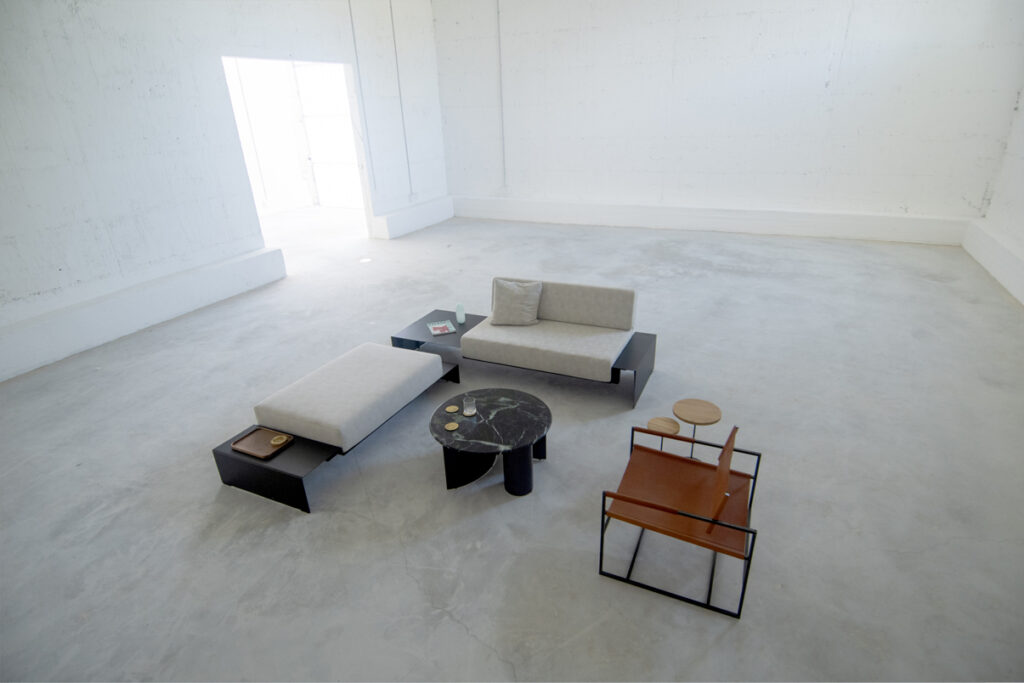
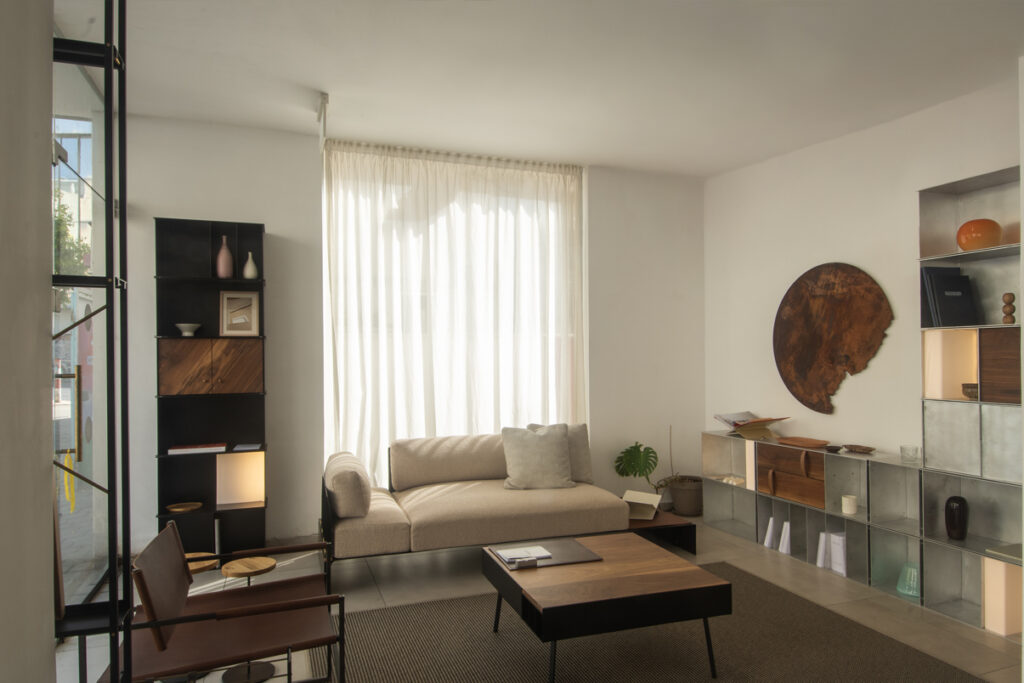
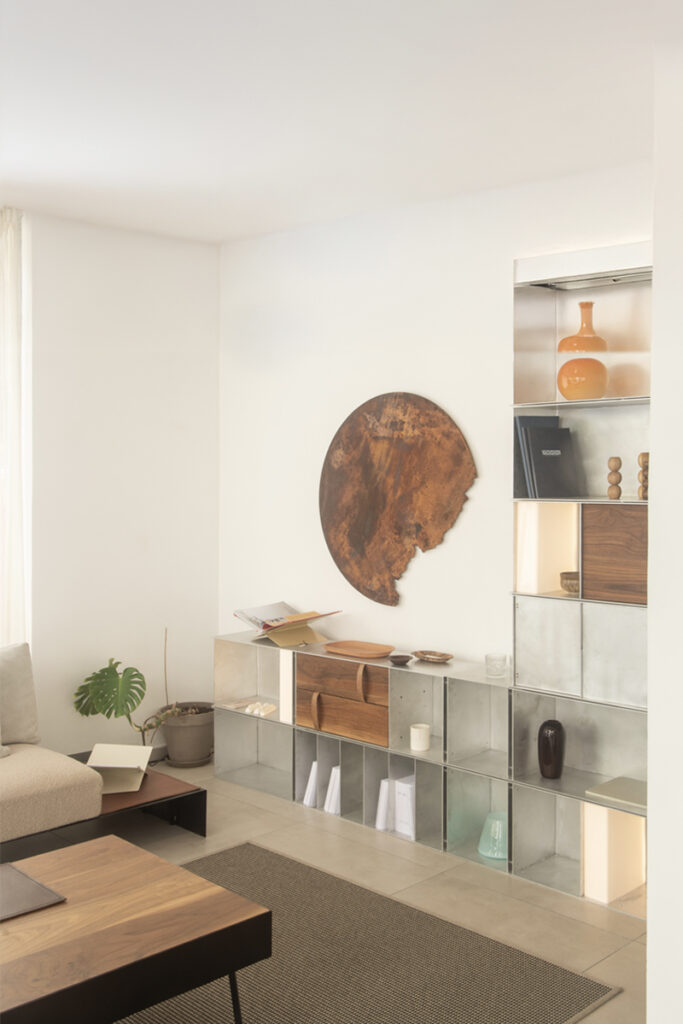
Today we turn to the world of product design – to the way architectural thinking, shaped by working with large spaces and urban scales, can gradually lead to creating objects you can hold in your hands. Our conversation is with Tomer Nachshon, founder of NACHSHON Furniture Design Studio in Haifa. We talked about his path, his approach, and what makes an object truly meaningful.

Tomer, how did you actually come into design? Was there a moment or influencer that pushed you towards this field?

I think I was doing design long before I knew to call it “design.” When I was young, I spent a lot of time in my father’s workplace. His business was sound and light systems for events, but he also had a small carpentry and knew some welding. I grew up around materials, tools, and someone who always made things himself. I was very drawn to creating things with my hands – materials fascinated me. I learned jewelry making, soldered copper, took a blacksmithing course, worked with leather, made bags… things that most kids don’t do. During those early design processes, without knowing it was “design”, I learned to think, create, and choose.

However you went to study archutecture, right?

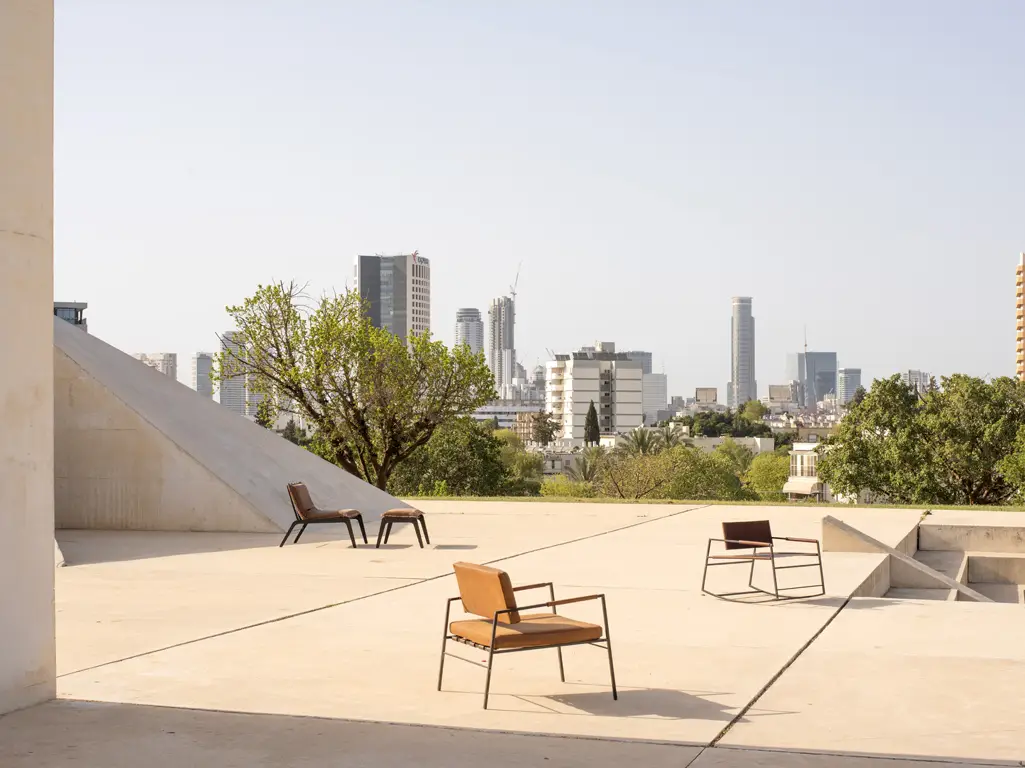
Yes. Because I thought industrial design wasn’t a “serious” profession. But during my studies at the Technion, where I later taught for 11 years, I discovered architects like Mies van der Rohe and Marcel Breuer who designed furniture. I loved that scale – the materiality, the speed of design, the intimacy of it. I started making things for myself from materials I collected in the street (and I still do!). Eventually I designed an armchair for myself – I’m looking at it right now in the studio – and it became a real piece sold again and again!

I worked as an architect for seven years, but my architectural role got smaller as furniture design took over. The real turning point was deciding to leave architecture completely, long after I had already sold pieces in galleries and worked with hotels. I realized I couldn’t split myself anymore, I had to choose.

Your studio is a small family-based workshop, yet your craftsmanship is exceptional.

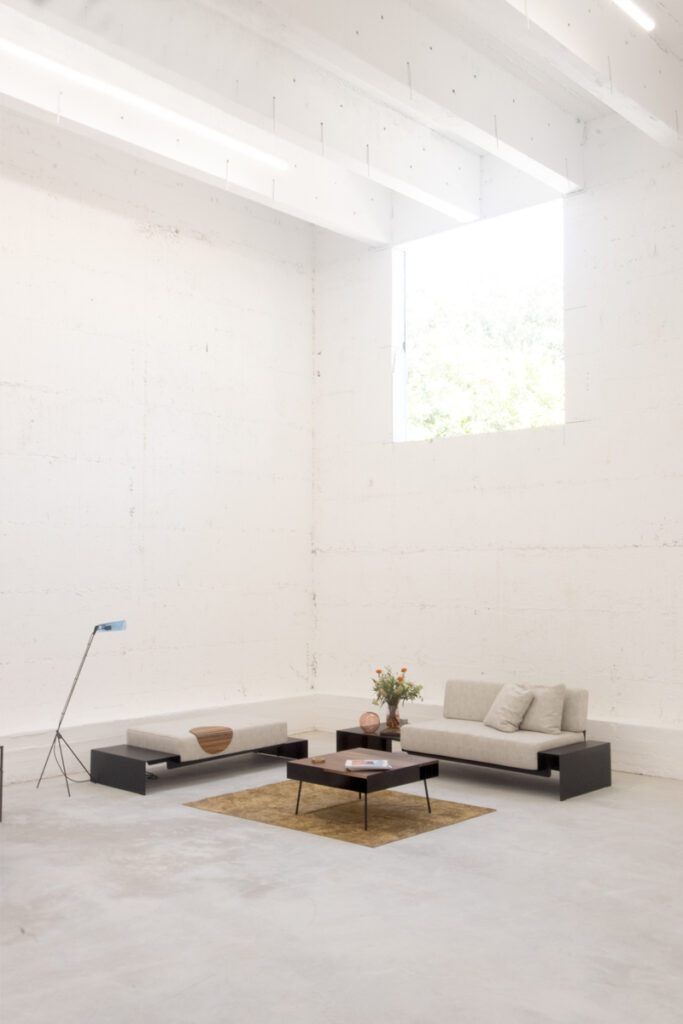
At first, I used to work exactly where my father worked. I developed my business there. He worked with me and we still collaborate, but half a year ago I moved to a new workshop in Haifa – a dream that came true. Industrially pretty. Even though the space is new, the atmosphere is the same – family-like. When someone new joins us, it feels like adding a new family member.

What are the core creative and operational principles behind your quality?

As for quality, it’s simple:

  1. It has to be perfect. Otherwise it’s impossible to convince clients to buy. There are few studios in Israel that design and produce locally. Customers take a risk choosing us, especially at the beginning. So yes, quality must be exceptional.

  2. I can’t create anything that isn’t very, very good. My father once said: “Everyone can draw a crooked line. You must be the one who draws a straight one.” Every corner must be perfect, even the hidden ones.

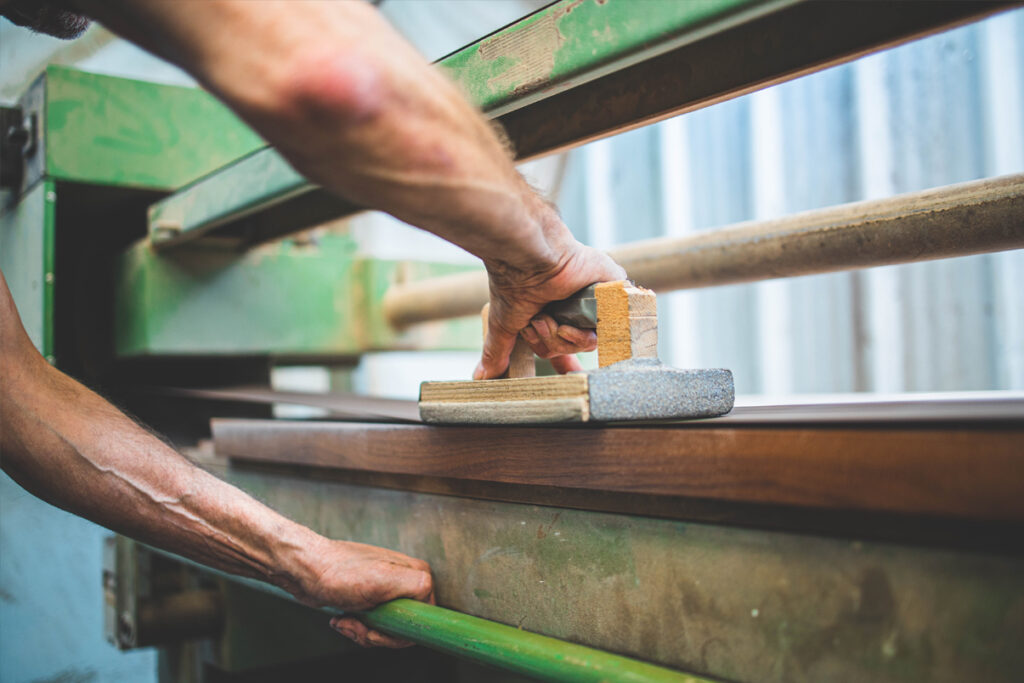
  3. Everything is done in-house. No outsourced carpenters or welders. I walk around, check every detail, ask for another touch if something isn’t right. When someone works on a piece for hours, they may stop seeing defects; another eye helps.

How is the work divided in your team? Do people have specific roles?

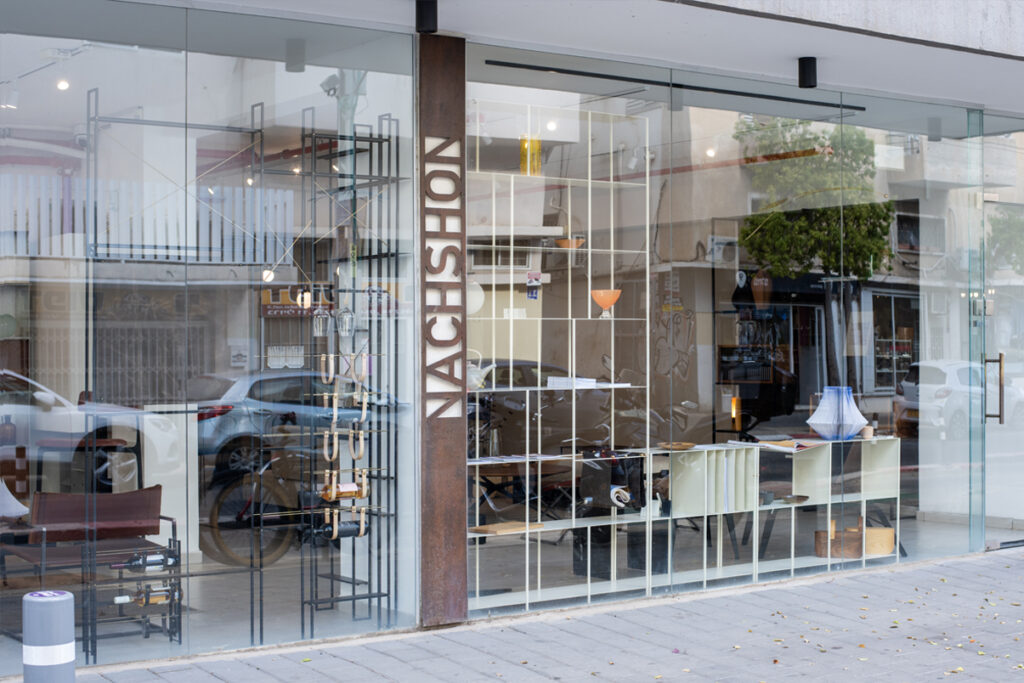
We’re tiny. Four people in the workshop plus me. In the gallery there’s Adva – more famous than I am, and rightly so – and two marketing people. I’m the designer, but I’m not the only designer. The wood master, the leather specialist, the metal worker – they all comment, suggest thicknesses, propose changes. Sometimes they say something won’t work. Sometimes I insist we try anyway, and sometimes we succeed. It’s teamwork. Everyone has multiple roles. Vladimir, for example (he worked with my father before working with me) is great with machining and metals, very strong. Others also switch hats. Avia works with leather and textiles and is an essential workshop’s manager.

If one person gets sick, we’re in trouble. Everything depends on everyone.

How did you manage to grow Nachshon into a successful business?

“Successful” is a big word. If surviving 10 years in Israel counts as success, then yes, we succeeded. My answers:

  1. Do everything yourself. No one will do it as well as you.

  2. Find good people. And if someone isn’t good enough – with a hug and a smile but they have to go.

  3. Perseverance. Never give up.

  4. Optimism.

  5. Belief. I’m not religious in the usual sense, but I believe in myself, in the team, in the future. Every new design feels like it will be the big hit. It rarely is, but the belief keeps me going.

What advice would you give to young designers?

It may sound cliché, but: find your thing. Find your strengths. Find what makes you different. Understand whether you sell a product, a service, your mind, your heart. Define what you do, very accurately. I repeat my explanation to every new client: what we do, what they can find here.

If to talk about something practical – let people leave with a bag. Not everyone can afford a very expensive item. But they should be able to take home something they love, at least a small item. It creates a connection.

How do new collections or objects come to life?

In the beginning it was pure freedom: I simply wanted to design something. Now the collection has structure. Sometimes it starts with: “We’re missing a light fixture.” or: “People keep asking for a tea cart.” Then we make a market research, find 10 tea carts, compare prices, decide how we want to position ours – say 800 shekels – and work backward: which materials and processes allow that price? We often develop something technical and something intuitive in parallel. So many reasons can start a new design.

Do you feel competition with other designers working with metal and leather in Israel?

The design market in Israel is developing fast in the last 15 years, but it’s still young and limited. Because we combine metals, textiles, leather, and wood – this mix is quite unique. My real competitors are big importers – Tollman’s, Habitat, etc. If Israeli designers succeed, I’m happy for them. I’d even help them because it develops the scene. So I’m optimistic.

Tomer, how do you see the field of industrial design in Israel today? What are the biggest challenges?

The scene is developing, but the challenges are huge. First of all – prices and importer competition. Almost everything is imported, including materials which makes them expensive. The biggest challenge is advocacy. Israelis aren’t used to buying Israeli design because historically there was none. Now it exists, and we must constantly explain that we design and produce everything ourselves. This education is the hardest part.

Do Israelis want to buy “Kachol Lavan”? Is there a patriotic element?

Absolutely. Some clients need the Italian or Danish brand name, but many Israelis appreciate knowing that someone in Haifa earns a salary from this wood they are touching. They understand the value.

Does the government support local craftsmen?

It used to. In the 1950s fashion was heavily supported. Israeli products were promoted abroad. Not today. Right now, everything connected to the Ministry of Industry just makes life harder. There is huge potential in supporting local design – especially today, with wars, boycotts, and rising antisemitism – but currently there is no awareness. 

You created an Association of product designers. Why, and what are the goals?

So, it actually goes very well with what we just talked about. The fact is that we are now more or less established, and we feel safer and more stable in our every day work, but it took us about 10 years to get here. We see many people who simply cannot succeed because they lack knowledge or support. And I don’t mean financial support – I mean mental support, professional support, a community. We want the scene to grow bigger and stronger. It’s partially egoistic, even because if buying Israeli design becomes a natural part of culture, then people will buy his design, but also mine. Everyone wins.

And we really understand how lonely this path is. How hard it is. How long it can take to find answers to simple questions. So we thought: if we create a platform where someone can ask a question that took me two years to figure out, and they receive the answer immediately from me or someone else, then we did something good. In one of the events here, at Fresh Paint, we simply asked the audience: “Do you think there should be an Israeli association for Israeli designers?” And everyone raised their hands. It was surprising to realize that no such institution exists.

It’s important to say that what we are doing now is not yet a formal entity. We are not an amuta yet. But the goal is definitely to establish one. It’s the next step — complicated, time-consuming, but not impossible. The past two years were very hard for us, so we haven’t completed it yet. But the idea remains.

What goals do you set for the Assosiation?

The ultimate goals are:
– to create a real community;
– to offer guidance to independent designers who are no longer supported by any school-based programs;
– to build a subsidized space where new designers can sell their products, experiment, get feedback;
– to help establish connections with companies abroad;
– and to collaborate with Israeli ministries in order to receive institutional support.

There are programs that help recent design graduates. But after they leave those “greenhouses” and choose to become independent, they are completely alone. Our goal is to support those designers.

Have you already participated in international design exhibitions? What’s your approach to international exposure?

We took part in 3 Days of Design in Copenhagen. It was very good – we connected with a gallery in Copenhagen and another in Hamburg, and we’re working with both. The dream, of course, is Salone del Mobile. There are other exhibitions I’m very interested in – ICFF in New York, for example. It fits our style. And also Ambiente in Germany – a huge buyers’ expo. But before doing any of those, we need a stronger production base. First, you need a lot of money just to do a proper job at an exhibition abroad. And second, if it succeeds, people might order 200 units of something. If you cannot produce them, you lose money. So we still have some distance to go.

If you suddenly get a big order now, are you ready for it?

Yes. Actually, I think this is one of our strengths – I’m not afraid of big orders. When I was still an architect, someone wrote to me asking if I could design items for his hotel. I told my mother, and she said: “What happens if he really hires you?” I said: “We’ll find a solution.” The deal went through. We produced 200 units. If I have an order, a real opportunity, I will find the place, the people, the way. We are creative people. We are here to work. So no, I’m not afraid. I’m eager for the chance.

Do Israeli product designers need to step abroad? Or can the Israeli market be enough?

The answer is yes and yes. Israel is small, but larger and more eager to buy than many assume. There is money here, and interest. But I don’t think we should stay within our borders. Anyone who can, should aim abroad. I would love to sell more internationally. We don’t manage to do it yet, but I’d like to.

Of course, it depends on the product. Some products scale and ship more easily, others don’t. And producing in Israel is very expensive, unbelievably expensive. Good design should also be efficient to produce. What we do is not cheap. When I manage to design something that looks good, lasts, and costs less, I feel like a good designer. If I design something beautiful that only two people in Israel can afford – that’s not good design. It doesn’t help anyone.

So you aim to create products that are both well-designed and affordable?

Absolutely. Affordable design is good design. Is it easy in Israel? No. Everything is expensive, and once you earn a little, you immediately owe tens of thousands of shekels to the state. We haven’t succeeded yet in producing many items that are both excellent and inexpensive. It’s a challenge. An ongoing challenge. But it’s part of being a good designer.

And finally — for interior designers: what are the advantages of the materials you work with? Metal, leather, textiles?

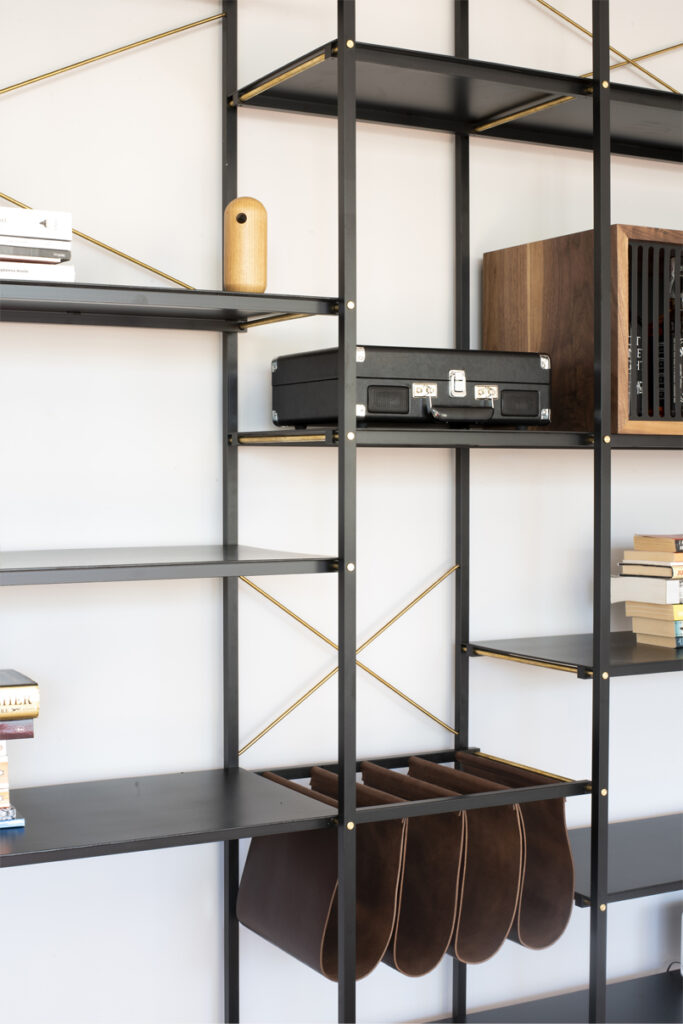
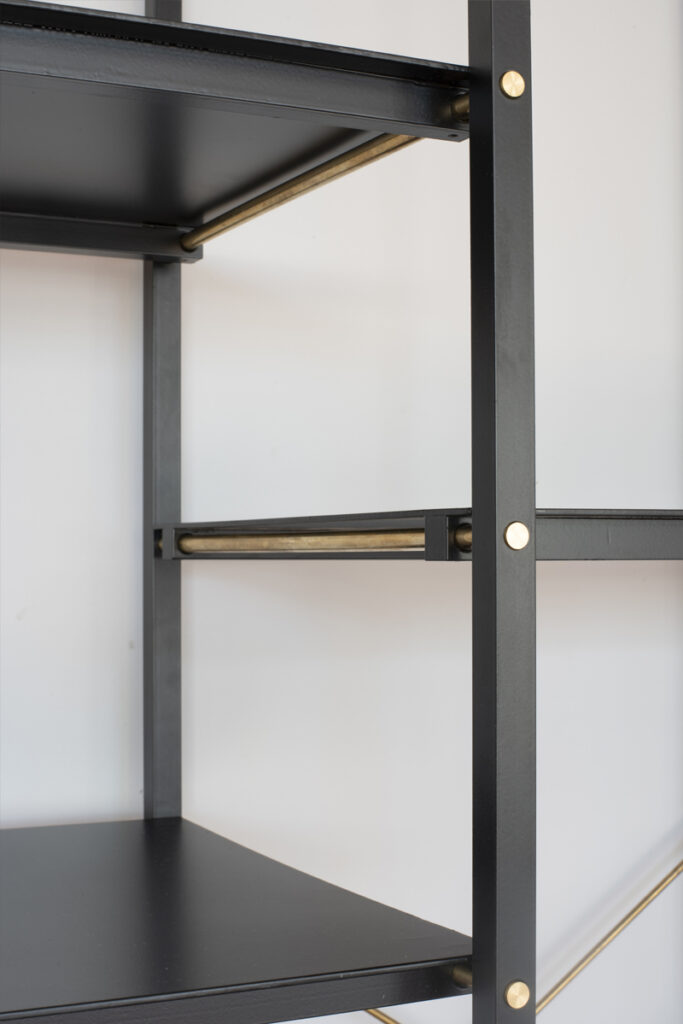
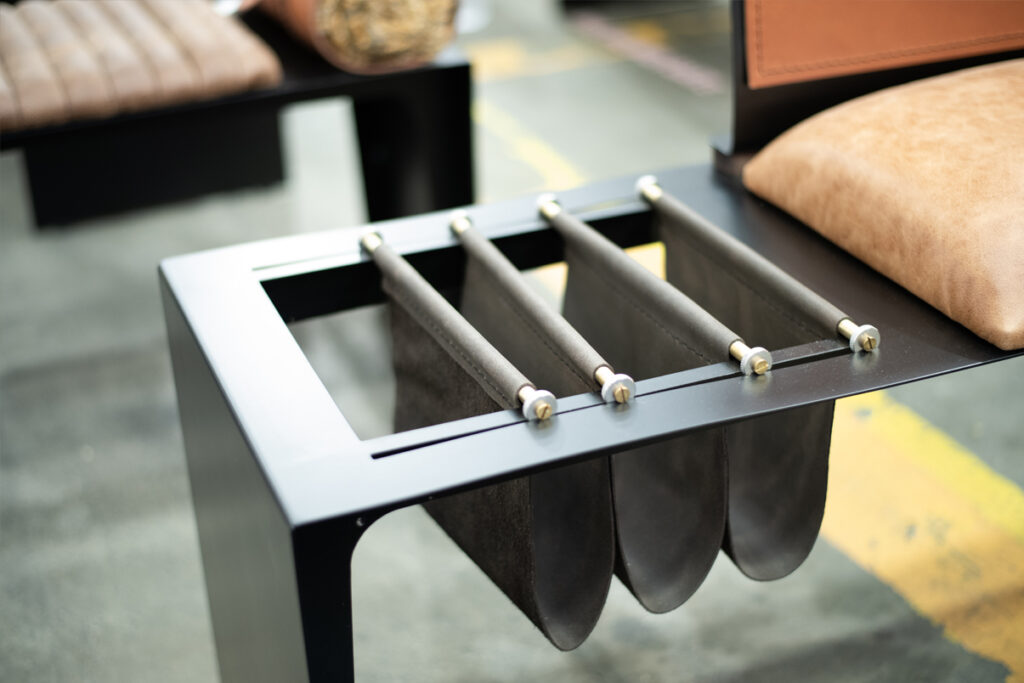
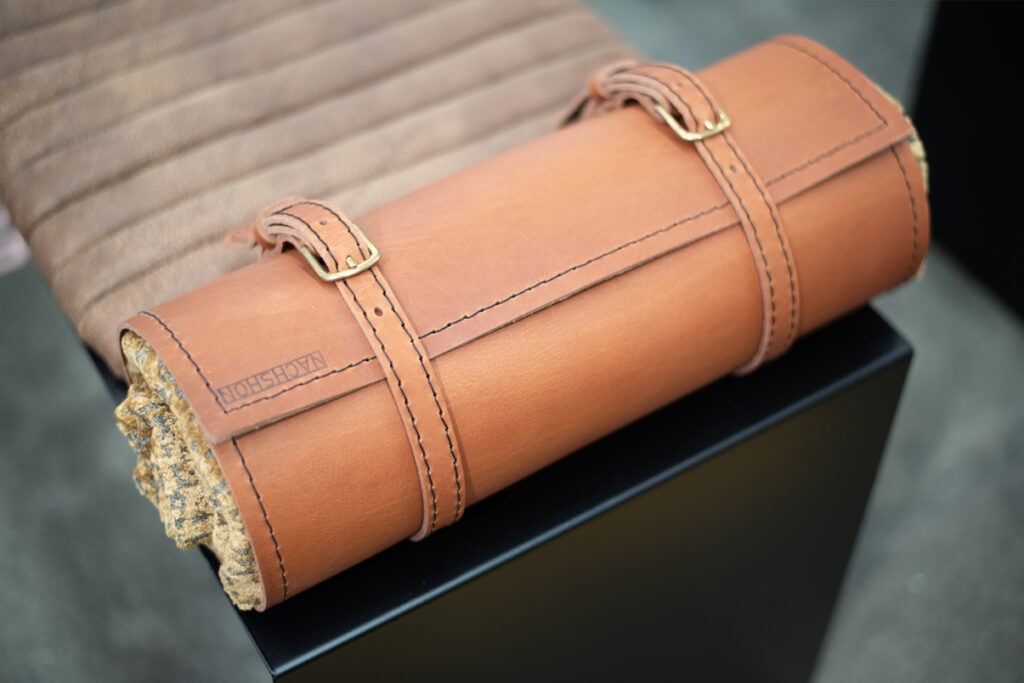
First of all – come talk to us. Not to buy. To understand. Come see why we use aluminum, steel, brass; why we bend something here and weld something there. Come understand the possibilities and challenges of each material. Because knowledge is the beginning of good design. If you have an idea – come to discuss it! We are open to collaborations.

Do you make custom pieces from designer’s sketches?

Officially, the very short answer is “no, we don’t do custom work,” but the real answer is “yes, of course we do.” If you come with a sketch or an idea, I immediately begin thinking: what do we have here, what techniques, what processes, what materials can serve this idea? How can we shape it together?

For example, I designed a desk for a hotel in Jerusalem. I told the architect: I want to work with you, but you must allow me to bring my process knowledge. Not because I think my design is better, but because I know how hard it is to bend a certain metal, how much it costs to paint it, how long it takes to weld it and this knowledge is crucial. The project succeeded because we connected his vision with our knowledge. So again, come talk to us.

What is your biggest dream?

I want this business to be bigger and stronger. I want to design – that’s what I love most. I want the business to be stable enough so I can also invest time in the association and help other designers. I want to develop good products, sell abroad, grow. The gallery is wonderful, talking to people is wonderful, but what I enjoy most is being in the workshop, experimenting, discovering that one material works with another, thinking of the next process. I want to design every day.

Interview by Nadia Kraginskii and Olga Goldina for DI CATALOGUE

On the cover : 

Contacts: