Architecture, Landscape

A Garden for Rest: Landscape Design Insights by Itai Salem

For landscape architect Itai Salem, a garden is a living, breathing extension of home. Rooted in curiosity and guided by intuition, his approach blends architectural structure with the rhythm of nature. In this conversation, Itai shares  how proportion, repetition, and emotion shape his design process, why plants — not paving — should take center stage, and how a true garden becomes a place of rest, renewal, and joy.

Itai, how did you get into the profession?

I grew up in Jerusalem, in a house surrounded by a garden, which my mother always lovingly cultivated. After completing my IDF service and the travels that followed, I settled in Tel Aviv and rented an apartment in a Bauhaus building with two balconies.

My favorite pastime became visiting nurseries – wandering among plant stalls, learning the name and nature of each plant, experimenting with placements, and discovering how to care for them properly. Soon my terrace was overflowing with so much greenery, that it stood out to everyone on the street. Neighbors began asking for help with their own balconies, and slowly, through word of mouth, this hobby evolved into designing gardens on rooftops, courtyards, and eventually private homes.

Over time, I realized I lacked formal knowledge and wanted to understand the principles behind design and planning. For the first time, I felt a deep drive to study seriously. I enrolled at Ruppin College of Landscape Architecture, even as my business was already running. Combining work and study was challenging but deeply rewarding – a time full of discovery and growth. My passion for the field only grew stronger, and over the years I built a professional team of landscape architects, designers, and garden builders.

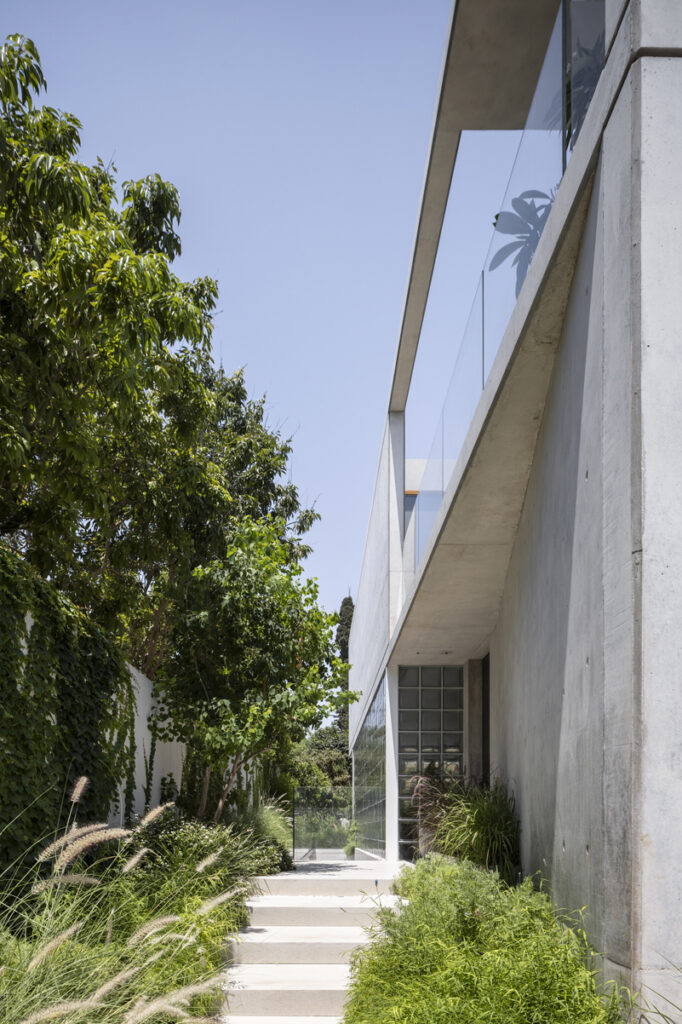
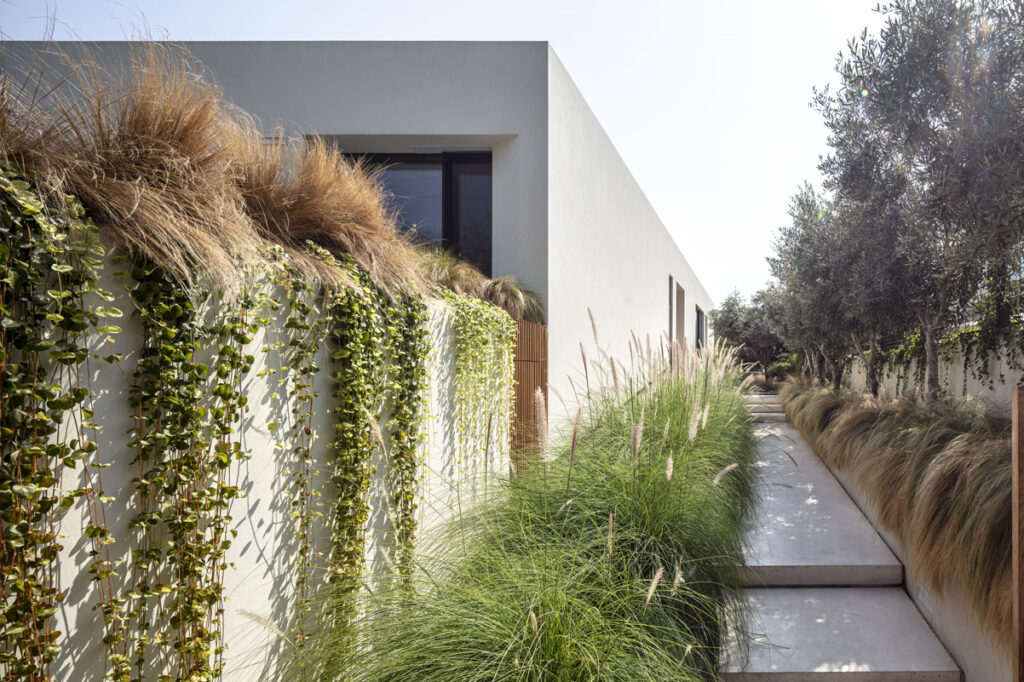
YD House 500 sq. m. Architecture - Iris Horowitz Chelouche, photo by Nimrod Levy
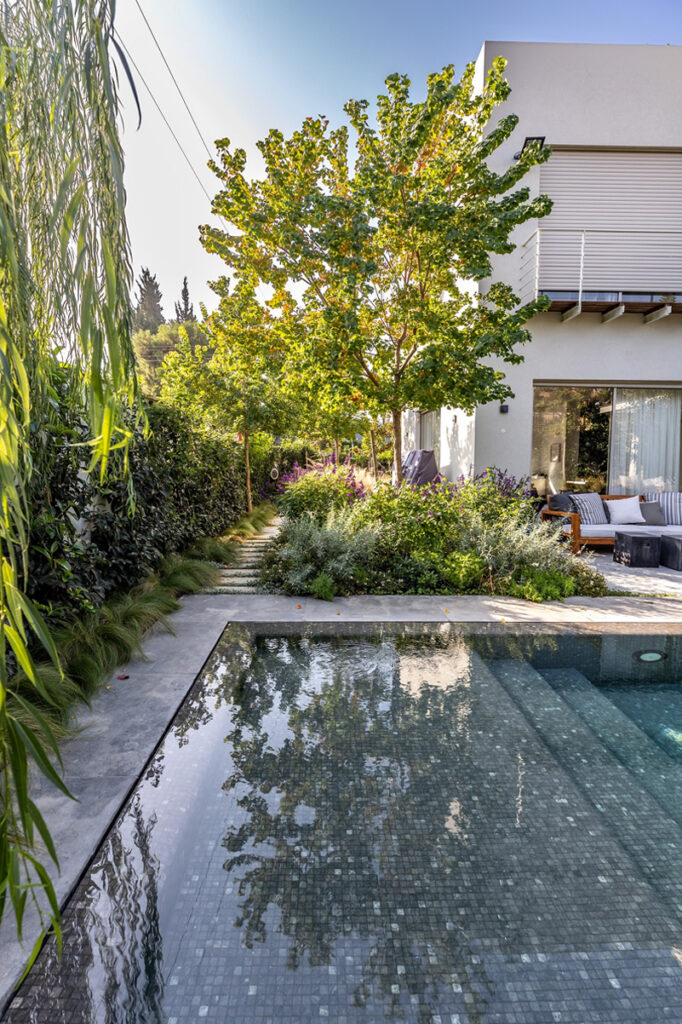
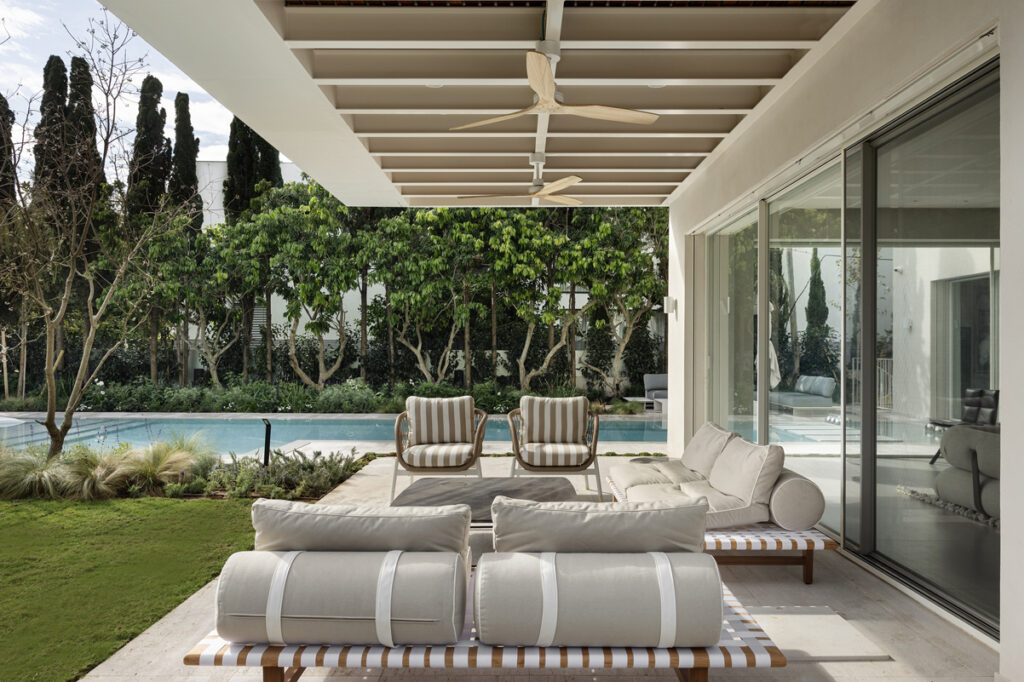
Ef House 500 sq. m. Architecture - Mamon Balas Rozner Architects, photo by Shira Shames

That sounds so inspiring, Itai! What had a big impact on your development as a professional?

After finishing my landscape architecture studies, I began traveling to see projects and gardens that had always inspired me. My first major trip was to Mexico, where I explored the works of Luis Barragán – visiting both the houses he designed and those he lived in. I was moved by how architecture, light, and landscape could merge so seamlessly.

Later, I traveled to Andalusia, where I was fascinated by the courtyard gardens – the patios tucked into every corner, the blend of old and new, and of course, the Alhambra Gardens, where I first understood what true design perfection and precision in execution mean.

Every year, I made a point to visit the Chelsea Flower Show in London – the world’s largest garden exhibition. I was inspired by how each small space could tell a complete story and by the respect and platform given to design itself.

I also spent countless hours in Kew Gardens, absorbing every detail, and visited botanical gardens in nearly every country I traveled to. These journeys became a deep well of knowledge about plants, light, and climate – and a continuous source of creative renewal. I’ve always been drawn to the dialogue between architecture and landscape, and how they coexist in harmony.

What is the starting point of a project for you?

Everything begins – and ends – with people. There’s a great deal of research involved in truly understanding who you’re designing the garden for: the family structure, lifestyle, and needs. The process includes an in-depth study of the clients, the terrain, the surrounding landscape, the topography, and a close collaboration with the architect and the design and construction teams. It also requires a deep understanding of the architecture itself — how to integrate the interior and exterior spaces — while working with consultants and developing the concept and inspiration for the project.

Most often, the “spirit of the place” emerges during the very first stages of planning and is shaped by all those factors, while other times it evolves gradually as the project develops.

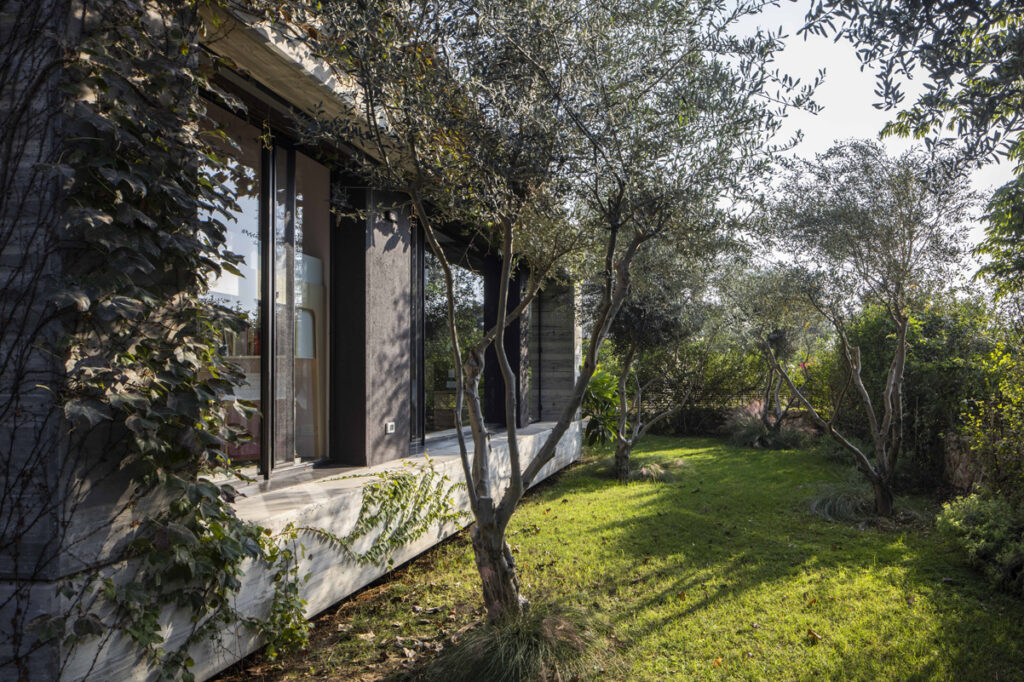
K House 900 sq. m. Architecture - Ronnie Alroy Architects, photo by Amit Geron
The house in between 500 sq. m., Architecture - Tal Goldsmith Fish, photo by Amit Geron
Ef House 500 sq. m. Architecture - Mamon Balas Rozner Architects, photo by Shira Shames

What does the work process itself look like, can you identify the main phases?

The process begins with getting to know the clients and forming a first impression. Then comes a comprehensive research phase — a period of study where we learn about the clients in depth, analyze the site from every angle, and begin to define the planning principles. This leads to the creation of a garden that truly feels like a place.

Next, we meet with the studio team to develop sketches and several alternative planning concepts, each with its own unique idea and presentation.  This begins a dialogue to understand which direction feels most natural.

Sometimes everything clicks in a single meeting; other times, it takes several sessions — with revisions in between — to refine the concept and establish the most suitable plan for that project. Once the conceptual phase is complete, we move into full collaboration with the entire project team, which includes the architect, interior designer, building inspector, construction manager, contractors, and consultants. The project then advances simultaneously through both the design and implementation phases.

Itai, could you share a few favorite plant combinations or design methods you often return to? It would be especially inspiring for young landscape architects learning to create balanced compositions.

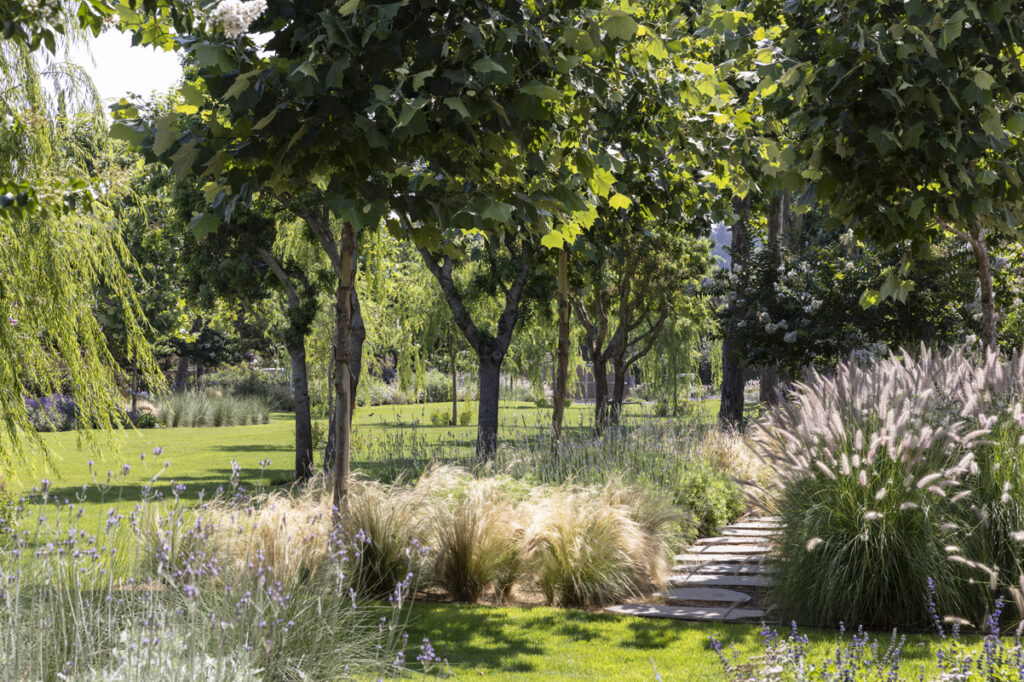
The Nachala Project, 12.27 hectare. Architecture - Orly Shrem Architects, photo by Amit Geron
Bo House, 685 sq. m. Architecture - Neuman Hayner Architects, photo by Nimrod Levy

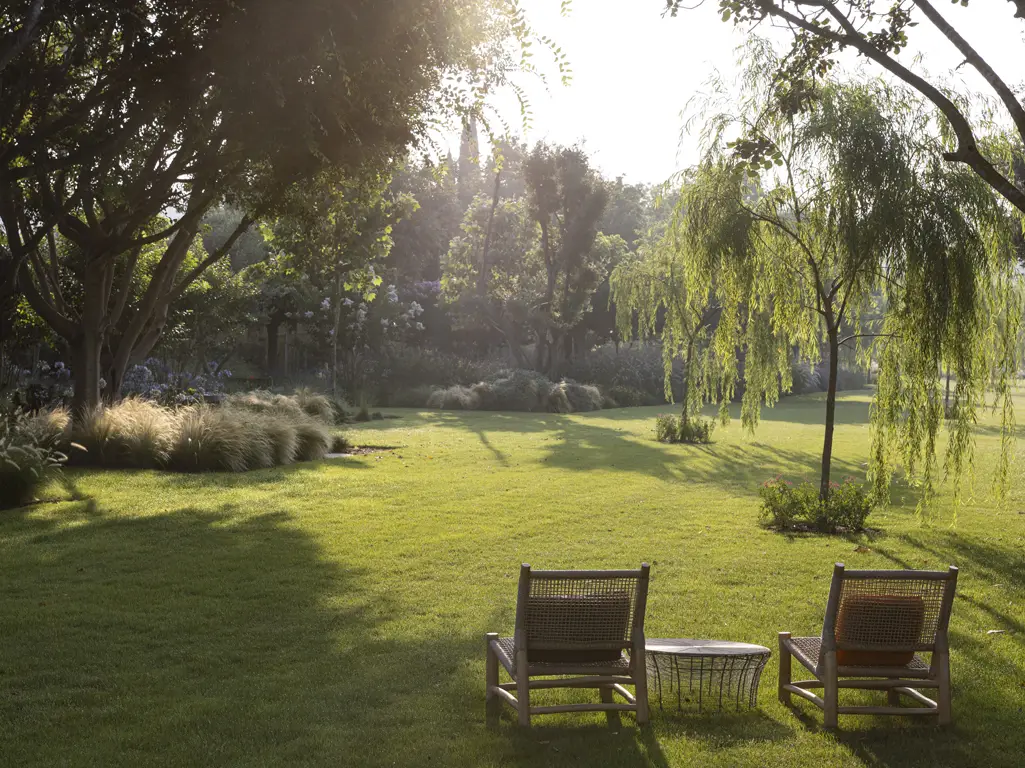
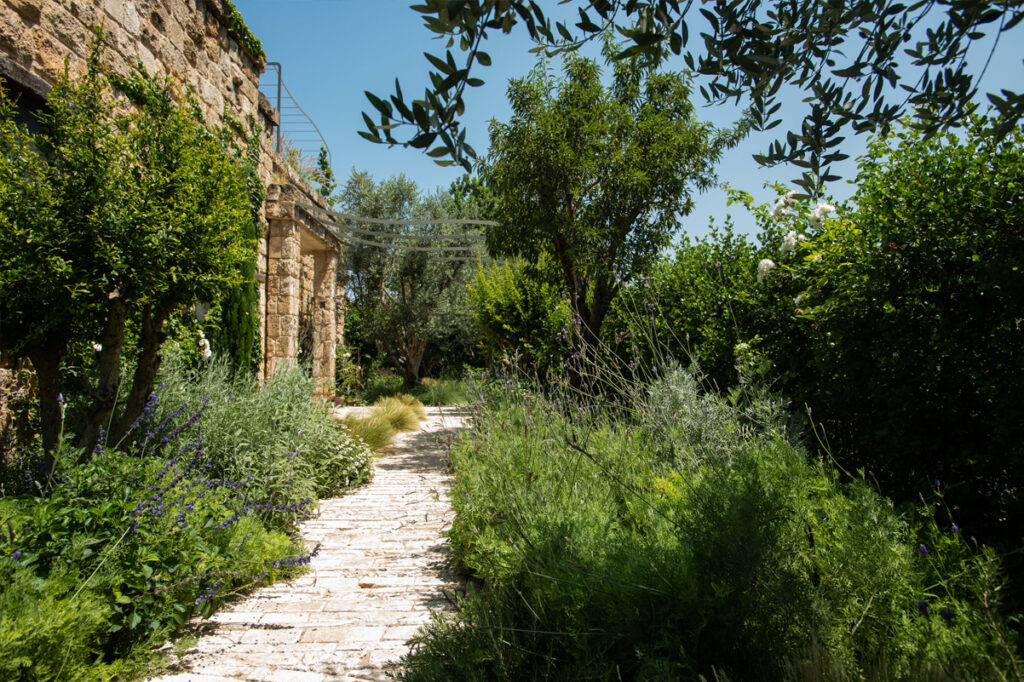
When we design a garden, plants are always the main focus. First of all, the trees create the skeleton of the space. Their placement is crucial – we choose species that allow the plants below to thrive without blocking too much sunlight or closing off the sky. We usually prefer lighter, airier trees, often deciduous.
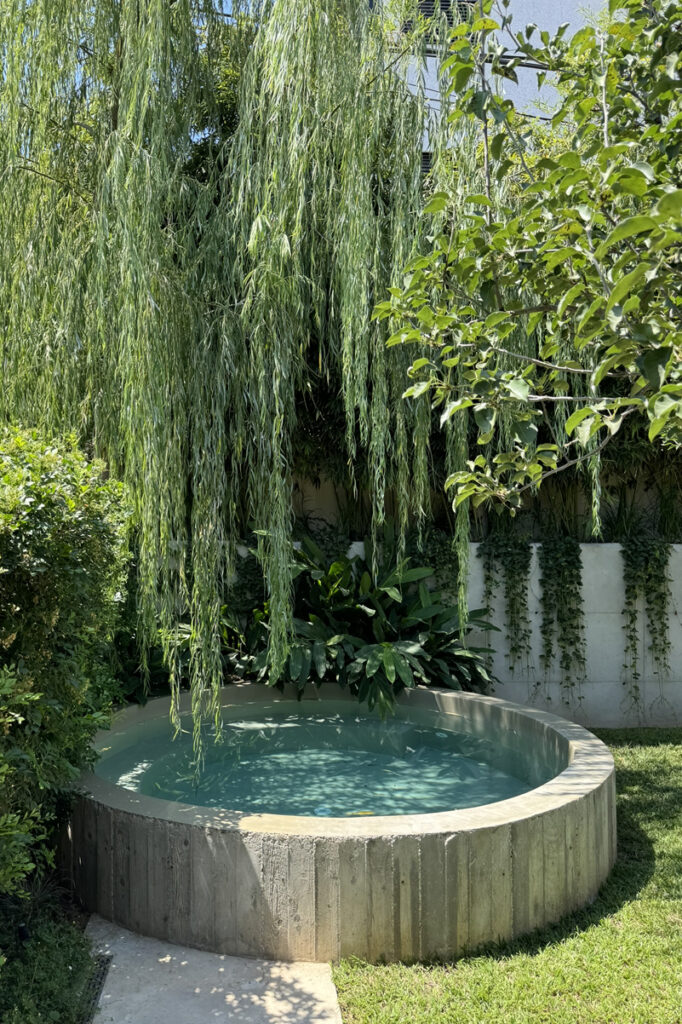
Some of our favorites include weeping willow, Chinese tallow, oak, white poplar, lagerstroemia, and ornamental pear – they form the main framework of the garden.

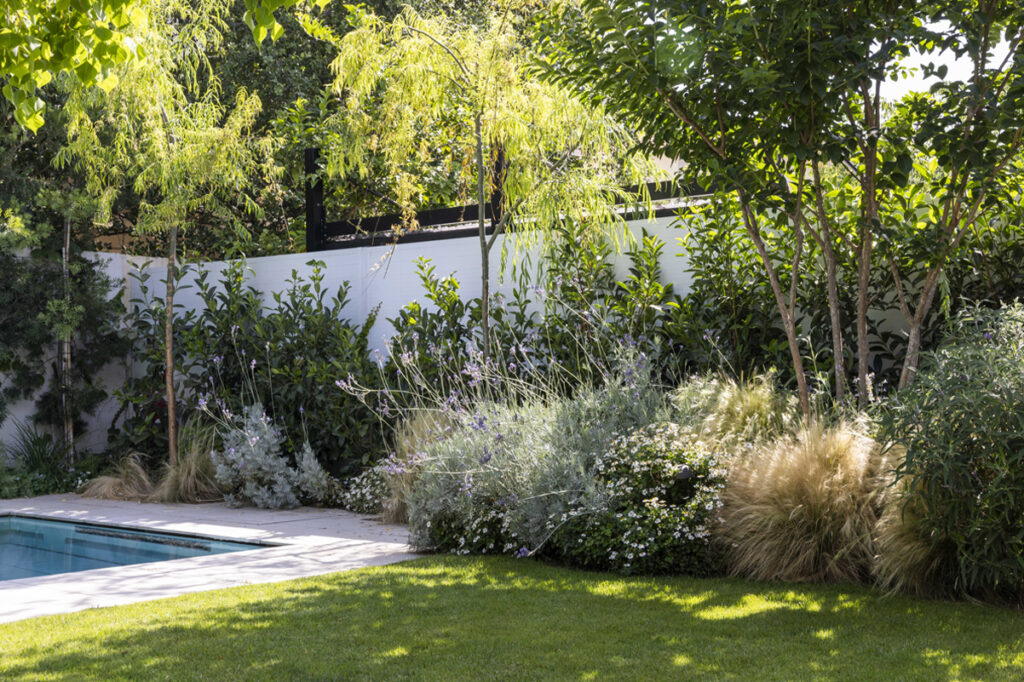
Next, around the edges, we work with evergreen shrubs – strong, dense plants that create a rich green background. They can hide walls, ensure privacy, or simply add a lush border. We often use viburnum, Carolina cherry, dodonaea, and murraya.

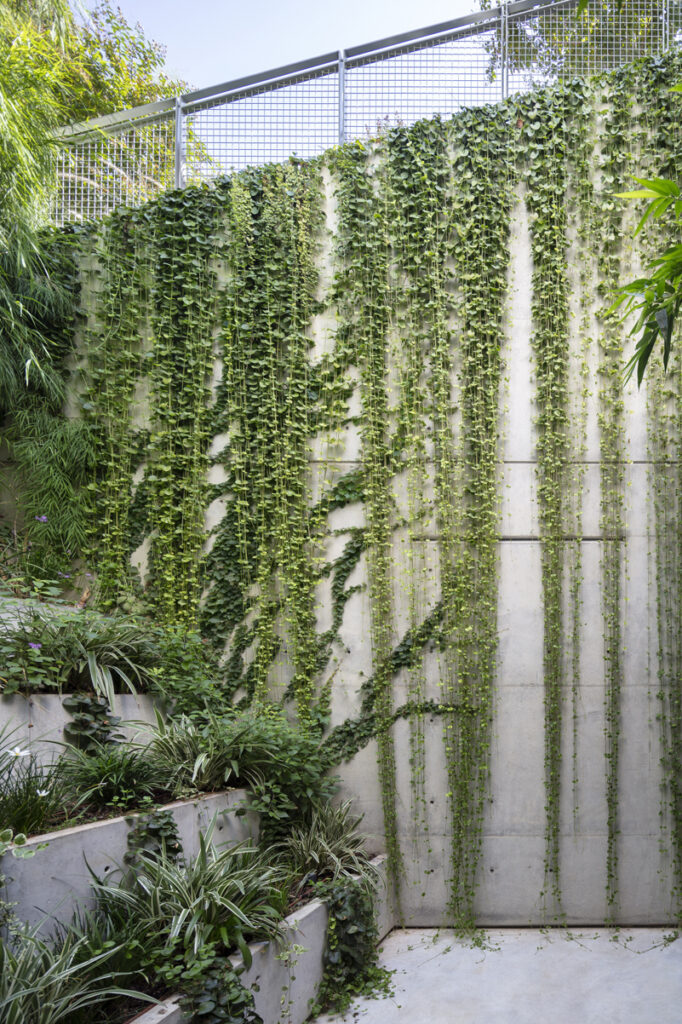
To introduce an element of surprise, we add flowering plants. Since evergreen shrubs look the same most of the year, we integrate climbing white roses, ‘Iceberg’ roses, hibiscus, and other flowering species to bring seasonal highlights and contrast. Once the structure of trees and shrubs is in place, we move to the lower plantings – the layer closest to the viewer’s eye. Depending on the project, we typically combine 3–4 different species to create a layered, vibrant composition.

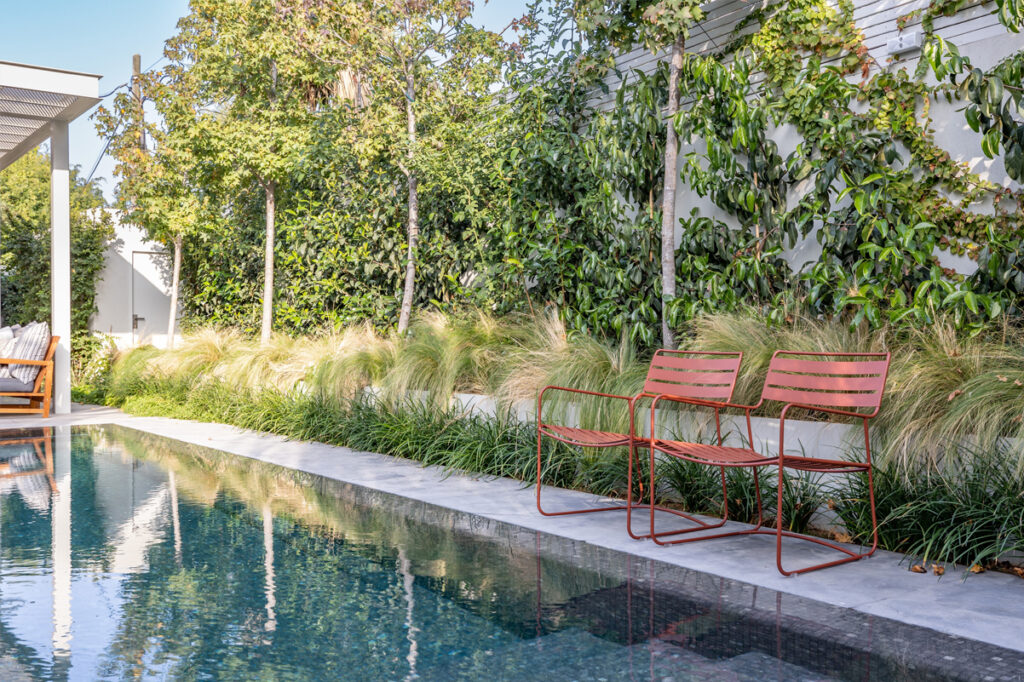
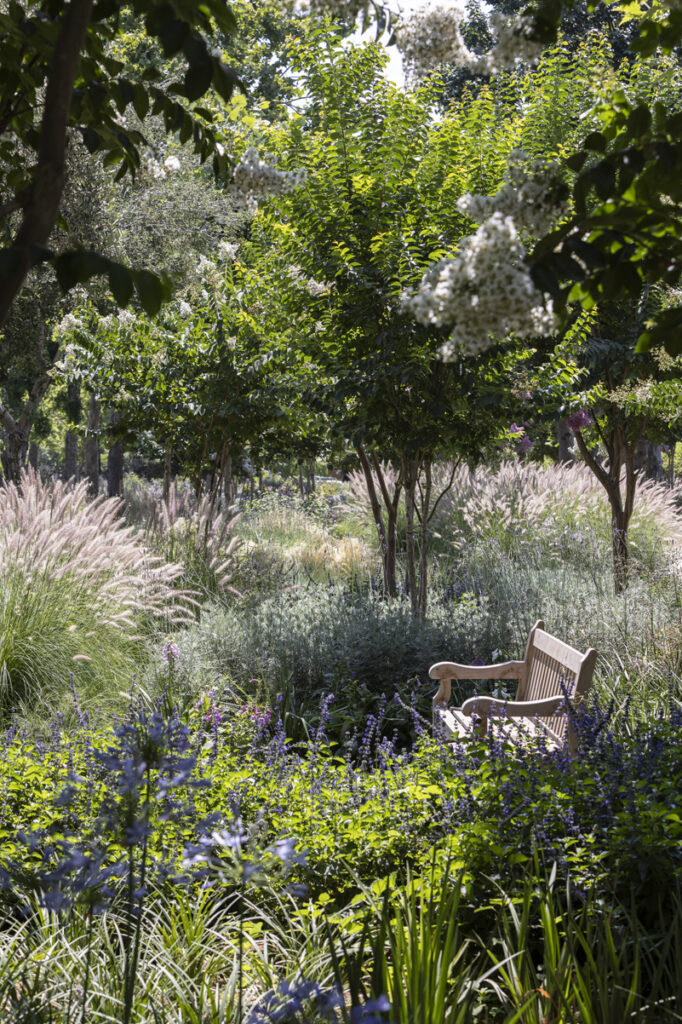
We especially love ornamental grasses for their movement, emotion, and lightness. Favorites include miscanthus, pennisetum, stipa, liriope, and dietes – these form the base of the lower layer. In general, we prefer plants with inflorescences (flower clusters) rather than single blooms. Many come from the sage family – salvias, lavender, and other soft-toned flowers in purple, white, and pink – creating a natural, harmonious feel. We also incorporate herbs such as rosemary, thyme, oregano, lemon verbena, and mint for their fragrance, texture, and vitality.

There’s no strict formula to this process – it’s mostly fieldwork. We bring many plants to the site, arrange them, move them around, and adjust until it feels right to the eye. It’s a deeply intuitive and artistic process.

Is it also true for balconies or rooftops?

In rooftop or balcony projects, the plant palette becomes smaller and more precise. We choose strong, resilient species that can survive in containers and tougher conditions. In those cases, we might look for trees with distinctive shapes – for example, a four-trunk tree that creates a strong focal point.

Can you share with us some of your favorite life hacks?

If there’s one “trick,” it’s the repetition of elements. People often make the mistake of mixing too many different plants without repeating them, and the result looks chaotic. But if you create continuity – for example, repeating groupings of lavender and stipa – you get a much more cohesive and elegant composition. Sometimes we even plant large groups of a single species, like lavender, to create a “field effect.” It’s about finding the right balance between diversity and repetition.

SDT House, 450 sq. m. Architecture - Ronnie Alroy Architects, photo by Amit Geron

Do you have favorite plant pairings you find yourself returning to time and again?

I’d be lying if I said I don’t repeat certain combinations. I do have a winning formula. Some of my all-time favorite plants, which I use almost everywhere, are lavender, rosemary, sage, stipa, and dietes.  They’re very versatile and perfectly suited to the Israeli climate.

But since the world of plants – like the world of colors – is so rich and varied and practically endless, we collect more and more combinations from one project to the next. We try a wide and interesting variety of plants. In my eyes, all plants are beautiful and appropriate – the real wisdom is knowing how to combine and match each one to the right place. 

How would you describe the differences between landscape architecture in Israel and Europe?

The main difference between Israel and Europe is that in Europe, you can see high-quality landscape architecture everywhere in public spaces – parks, promenades, and urban areas. In Israel, it’s still concentrated mostly in private gardens, so the general public doesn’t see it daily. That’s why awareness and demand are still developing here.

But that’s slowly changing. Some municipalities are starting to commission more ambitious landscape projects, and developers of residential buildings are investing more in good outdoor design. Over time, I believe this will also extend to public spaces.

Is the demand for high-quality landscape design growing among Israelis? 

Yes. We’re getting calls from all over the country — from kibbutzim, moshavim, and small towns — from people who are inspired by what they see on social media and want to create beautiful outdoor spaces for themselves. However, the profession is still physically demanding and underappreciated, so there’s a shortage of professionals in the field. I hope that will change in the future.

You have several projects abroad. What are the main challenges of designing a garden abroad?

First of all, it’s very challenging, because we’re used to working very closely with the site here in Israel. We do prepare some things in the office, but most of the work happens on-site. We visit the place a lot, we look and study, because in the end, again, we really like to design at eye level. It’s hard to sit with a drawing on paper when the site is right there — you can go see it, feel it, and with your spatial vision and imagination actually build the garden in your mind and then translate it to paper, and not the other way around — build it on paper and then bring it to the site.

When working abroad, you don’t have that privilege to get to know the site as deeply as you do here, because there’s a limit to how often you can travel and also how much you can afford those trips. So you have to rely much more on your own experience, precision and detailed planning. Sometimes it works, sometimes it doesn’t. So far, our projects abroad have been successful, but it’s definitely challenging — and refreshing too. It’s fun to travel, meet local people, speak another language, and learn new things that you don’t see here.

Nevertheles, do you think that landscape architects would work more and more internationally?

Yes! I think it’s something that will keep developing into the international field, because landscape architects around the world are already used to getting projects outside their own countries. Especially in Europe, it’s very common. For example, Piet Oudolf who is one of the most famous garden designers in the world, especially in planting design,  works all over the world, and actually has also done projects in Israel. So it’s something very possible, and I think it’s very important for Israeli landscape architects to go abroad, because I truly believe that here in Israel there are several firms doing work at the highest international level. 

El House, a hectare. Architecture - RUST Architects, photo by Itay Benit

Itai, what is the most attractive for you in international projects?

In international projects you learn a lot – you find passion again, because you study new plants, new terrain, you learn everything from scratch again, so it gives a very refreshing feeling. It’s very challenging, but also a lot of fun.

But I also think there’s a lot to do here in Israel — not just abroad. Public projects, hotels (we’ve done a few), special development projects, towers, seaside projects, nature restoration — there’s a lot of potential. There’s so much to do in landscape beyond private houses. Of course, private gardens are very special and enjoyable to work on, but there’s a whole world beyond them.

Regarding collaboration with interior designers and architects. At what stage do you recommend to call for landscape architect?

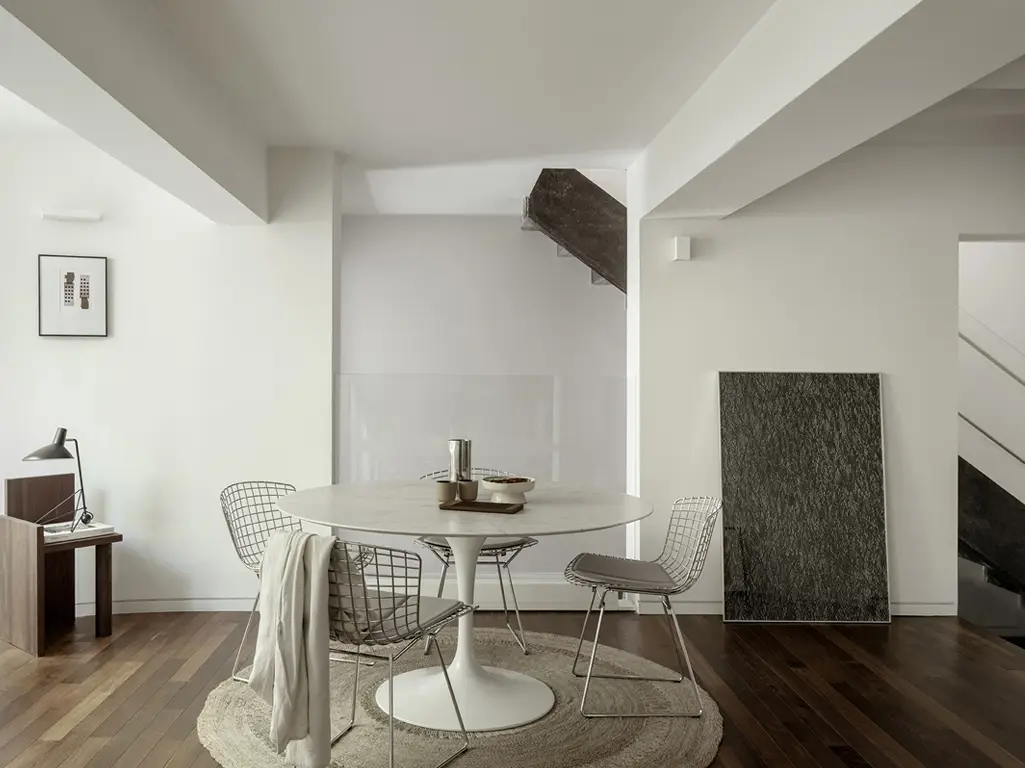
The transition from exterior to interior is one of the most important elements in a project. The more seamless and harmonious this process is, the more the two complement each other — the higher the quality of the project. 

Of course, a lot depends on the project. But today, architects who are already used to working with landscape architects — who understand the added value — they usually tell their clients right away to contact a landscape architect early on, either someone they recommend or someone the client finds, so that the house, the garden, and the surroundings all work together in harmony.

It also helps the architect, because when they’re planning the house — drawing the main lines, defining the directions — these things are much easier to coordinate early on.
At later stages, when the house already has foundations and is being built, it’s too late for the landscape architect to say, “It’s a shame there’s no window here, because there’s a beautiful view.” That doesn’t help anymore.

So when you join too late, you can’t really influence the project?

Absolutely, and the same goes for the architect — they might have made different choices if we were there from the start. That’s why I think the earlier we’re involved — already in the house planning phase — the better. And it doesn’t matter which firm, it’s just a big added value for the project. Because unlike other consultants who deal mostly with technical systems — plumbing, electricity, etc. — landscape architects work on the design and atmosphere. So from an aesthetic and architectural point of view, in any house with land, a landscape architect should be among the first professionals to join the process — even in penthouses.

Often, we’re called to penthouse projects where no landscape architect was involved, and then nothing was planned properly: heights weren’t kept, there’s no drainage, and there’s barely any space left on the terrace except for a few pots. But if it had been planned early, they could have had amazing built-in gardens with proper drainage and structure. So yes — the real value of landscape design starts at the very beginning of the project, when everything is born together

You mentioned that the most important element in the project is the transition form exterior to interior. What helps you create that seamless flow between interior and exterior spaces?

I believe the more you allow the garden to become an integral part of the house, the more successful it will be. The idea is that the garden should come right up to the doorstep and windows, and that it should be rich with variety — plants, trees, shrubs, climbers, herbs, fragrant species, and more. The stronger the presence of greenery, the greater the sense of natural flow and the longer-lasting the success of the garden. But there isn’t just one clear formula — it changes from project to project. 

House, 370 sq. m. Architecture - More Gelfand, photo by Shira Shames
The Nachala Project, 12.27 hectare. Architecture - Orly Shrem Architects, photo by Amit Geron

When do you feel a garden is truly complete? Is there a moment when everything clicks and feels just right?

For many clients, the garden feels “finished” on the day the construction is complete and the project is handed over. But for us, that day is only the beginning. A garden is a living thing — it needs time to grow and mature. In my experience, most gardens reach their true peak about two years after being planted, provided they’re maintained with care. Without good upkeep, a garden will never reach its full potential.

For me, the real magic is to come to the garden two or three years later, and photograph it as a creation in itself — not as part of the architecture, but as an independent living work. That’s how you can really understand the value of gardens, of plants.

Plants should be given space and respect.

Exactly, like in European gardens, where the materials are simple, timeless, repetitive — and the plants are the real story. And that’s exactly what our clients later tell us: “You convinced us not to over-pave, to keep natural grass and plant more. We can’t believe how much joy it brings us.” That’s what matters most — using the soil for plants. Plants are pleasure, life, and renewal. That’s the essence of landscape design — otherwise, we’d just be architects.

Do your clients easily agree with you to give respect to plants?

It’s a constant battle! Many clients want synthetic grass, more stones, more paving. We keep saying “no”. Do you want an outdoor living area? Fine – how many people will use it? Ten? We’ll design exactly for ten – no need for 200 square meters of tiles. If you want to host an event, you have grass – you can do it there. You don’t need a huge terrace for everyday life. We fight for this, because we know that in the end, this is what gives real value to the garden. That’s what people remember and enjoy. They won’t come back in five years and say, “Let’s tear up the tiles and make a garden instead.”

Garden of Eretz Israel, 500 sq. m. Architecture - Rinat Mashiah, photo by Gilad Radat

What do you want people feel when they step into your garden?

The goal is for the garden to feel inviting, to create an experience even for someone who has never lived with a garden before. The whole point is to give its owners a place of rest, retreat, relaxation, and enjoyment — a space to express their dreams and desires, and to feel freedom and tranquility. It’s a place to wash away the worries of the day and escape the noise of the busy street. In many ways, the garden becomes a direct extension of the home itself.

To  sum up, what is a good landscape design for you?

Good landscape design is always a play of proportions, rhythm, repetition, and intuition. It’s not something you can fully capture on paper — it happens on the ground, with your eyes, your hands, and your sense of space.

Interview by Nadia Kraginskii, Yulia Kovalenko and Olga Goldina for DI CATALOGUE

On the cover: The Nachala Project, 12.27 hectare. Architecture – Orly Shrem Architects, photo by Amit Geron

Contacts: